ICAR-Indian Institute of Groundnut Research, Junagadh
Sub: Key achievements over the past 11 years
- High yielding and high oleic groundnut varieties released: Two biofortified high yielding (>3100 kg/ha) varieties (Girnar 4 and Girnar 5) with high oleic (>78%) Besides these, Raj Mungfali 3 (RG559-3), a variety developed from segregating materials supplied by DGR was released for kharif cultivation in the states of Rajasthan, Punjab and Uttar Pradesh. Girnar -6, a high yielding variety has been released for Rajastham, UP, Punjab and Haryana
- Drought and salinity tolerant genotypes identified: 12 drought tolerant CAM variants (water saving upto 60%) and 4 variants with salinity (upto 4.5 soil EC) developed and two registered with NBPGR. Besides, 8 mid to late season drought tolerant, and 6 low (~500) water requiring varieties identified.
- Trait based genotypes/ABLs identified/developed: Six high yield (>3000 kg/ha), 15 High Zn content, 9 high Fe, 3 high resveratrol (2-7 ug/g)
- Other trait based ABL/genotypes/germplasm identified: 97 high oleic (>80%), 55 quality traits, 15 Fresh seed dormancy (>15 days) in Spanish, 17 Tolerant to Fe- chlorosis, 11 confectionery types, 13 tolerant to LSS, and one each resistant to stem and collar rot, 07 high oil, 10 low and high temp. tolerance, 09 early maturity (95- 100 days)
- Bioformulations developed and validated: 03 (NutGrow, DroughtGuard, SalGuard); MoU signed for NutMagic
- Two major QTLs (LLSQTL1 and LLSQTL2) for LLS which explained >10 % phenotypic variance (PV) and one major QTL for rust (RustQTL) resistance flanked by markers SSR_GO340445 and FRS72
- QTL for stem rot resistance: A QTL region of 5.2 Mb was identified on B04 involving 170 different genes.
- Germplasm maintained: 9129 germplasm and 106 Wild Arachis accessions, segregating materials of 19 crosses supplied to 16 centres
- Paclobutrazol reduced vegetative growth and increases pod yield and net returns in kharif groundnut
- Optimized row ratio and relay sowing date for improved system net returns in kharif groundnut + pigeon pea cropping system
- Identified efficient microbes for solubilisation of Zn, Mn, K and drought and salinity tolerant rhizobia for enhancing Biological Nitrogen Fixation.
- Management of foliar diseases: combination of Tebuconazole 2DS and trifloxystobin-75WG effectively managed LLS, rusts, etc.
- Management of white grubs and stem rot: Integrated management practices for white grub and stem rot developed
- Technologies certified by council:
- An expedient Ion chromatography-based method for high throughput analysis of phytic acid in groundnut kernels
- SalGuard: A formulation of endophytes is a savior of cultivation of groundnut in salt-affected areas
- Application of PSB as a seed treatment (500 ml broth/ kg seed) could save 25% in fertilizer-P use along with additional benefits of higher productivity (36% higher pod yield over control) and total P uptake (2.18-fold higher over no-P).
- PSB culture ‘BM-8’applied as a seed treatment (500ml broth / kg seed) was efficient in higher P-solubilization (up to 35.8 ppm).
- Application of organic acid mix (Citric acid (37.28kg/ha): malic acid (17.14kg/ha): oxalic acid (8.57kg/ha) at 4:2:1) at 60 kg/ha + DGRC1 culture (without addition of any P to soil) had resulted in realization of significantly higher pod yield. There was a saving of 25% in RDP through application of DGRC culture only with additional pod yield advantages (381 kg/ha) compared to absolute control.
- Identified and characterized two ABLs (PBS 22040 and PBS 29192) as Iron Deficiency Chlorosis (IDC) tolerant.
- Identified five efficient Mn-solubilising bacterial isolates for higher pod yield (11-24%) and Mn content in shoot (76-133 ppm).
- Seed soaking for 8 hours in water, ferrous sulfate (25 mg-1100 ml) or zinc sulfate (25 mg/kg seed) were effective in reducing PA content.
- Application of DAPG-producing fluorescent pseudomonads as seed treatment reduced the plant mortality due to stem rot (74% to 21-38%). Liquid formulation of DAPG 4 is recommended for mass production, storage and application as an efficient bio-inoculant.
- Established higher yield potential of C3-CAM variants of TG37A (viz., DGRMB3, DGRMB5, DGRMB19, DGRMB24, DGRMB31, and DGRMB32) under rainfed field condition. Expression of C3-CAM of TG37A resulted in prevention of significant biomass loss (59 to 38% even when associated with 5.2 EC salinity at harvest).
- Two years of cropping on a groundnut-wheat cropping system revealed that it did not respond to Natural Farming (NF) practice as it had reductions in both pod yield (29%), NR (31.9%) & BCR (9.7%) compared to ICM practice.
- After 2 years of cropping, overall productivity and economics followed the order: ICMP > OF> NF. While, on varietal front in groundnut and wheat, the trend followed were TG 37A > GG 22 and GW 451> Lok-1,
- Two spring-summer seasons’ studies on weed control indicated the proven efficacy of “Diclosulam 26 g/ha as PRE fb Fenoxaprop-p-ethyl 78 g/ha as PoE” for season long weed control in Southern Saurashtra region of Gujarat).
· Institutional Advancements
- DGR upgraded as Indian Institute of Groundnut Research in 2024
- Inauguration of 3 RRSs at Bikaner, Anantapur and Medinipur
- Establishment of Agri Business Incubator Lab
- Inauguration of MAS lab, Central Facility for Sophisticated Instruments, New Tissue Culture Lab, Crossing Block
- Establishment of seed godowns at RRSs at Bikaner, Anantapur and Medinipur
- Four groundnut Seed Hubs are operating at Gwalior, Mohanpur, Udaipur and Anantapur.
- Received EFC Genome Editing project sanctioned for three traits (phytic acid, herbicide tolerance and Spodoptera resistance).
- Received AINP Genome Editing project sanctioned for FAD2 genes.
- Received two new Projects under RKVY for 2025-26.
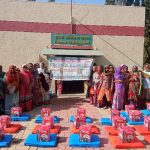
- Conducted 35 Trainings comprising more than 2000 farmers.
- Conducted 9983 FLDs during 2024-25.
- Breeder seed production enhanced to more than 15000 quintals in 2024-25.
- 4 Sr. Scientist and 2 Scientists have joined ICAR-IIGR, Junagadh.



 Views Today : 201
 This Month : 18335
 This Year : 69900
 Total views : 3219061