 ICAR-Directorate of Groundnut Research (ICAR-DGR), an apex Research Institution on groundnut was established under the aegis of Indian Council of Agricultural Research on 1st October 1979 to give a fillip to research for scaling productivity of groundnut keeping in view of its importance as an oilseed crop. This Institute came in to being at Junagadh in the Saurashtra region of Gujarat as the First Crop Commodity Research Unit under the category of National Research Centres of ICAR. This was elevated further to the level of a Directorate and rechristened as the ICAR-Directorate of Groundnut Research in 2009. Besides, research and extension activities envisaged under ICAR, an umbrella research project in the name of ‘All India Coordinated Research Project on Groundnut’ (AICRPG) also operates from this Directorate. Keeping in view the changing National needs and scope of groundnut cultivation, the Directorate has established three regional stations at Anantapur in Andhra Pradesh, West Medinipur in West Bengal, and Bikaner in Rajasthan.
The Institute has state of art research facilities and is an ISO 9001-2015 certified organization. Since its inception, this Directorate has constantly improved the quality of research and augmented the infrastructure facilities to realize its mandate and work as a centre of excellence. Research work carried out during the last four decades at ICAR-DGR, Junagadh along with AICRP-G has paid rich dividends in the terms of release of more than 230 varieties and development of a good number of matching production, protection and post-harvest management technologies. The quest of this Directorate is to maximize the economic, environmental and societal benefits to farmers and all other stakeholders engaged with Groundnut, to bring prosperity and security, through scientific interventions. We feel reassured in taking on every challenge in a big way to meet the goals in the frontiers of Groundnut scientific research and the ‘DGR Vision 2050’ document speaks volumes on it
This Institute is continuously striving hard to bring out the best in terms of new knowledge and technology for the cause of groundnut farmers in the country. The thrust being given to the oilseed sector in agriculture, for increasing self-sufficiency in edible oils, is an important step forward for taking groundnut cultivation to new heights. The contribution of groundnut to total oilseeds and edible oil produced in the country is immense and quantified to the tune of 27% and 16%, respectively. Presently, the crop is grown in about 5-6 million hectares in India producing around 10 million tonnes (MT) which has been a history in groundnut production consecutively for last three years in India. Groundnut is considered as one of the most important oilseed/cash crops because of the fact that it has greater food value as it contributes to nutritional security of farm families through consumption of energy and protein rich groundnut kernels and provides nutritious food (oilcakes and fodder/haulms) to livestock. Groundnut is also being increasingly used for table purpose, a shift from its use as a source of edible oil. Being nutritionally rich, groundnut and its value-added products and confectionery items have great demand in national and international markets.
Groundnut crop is affected by many abiotic and biotic stresses, posing challenges in increasing its productivity and production. High temperature, moisture-deficit and salinity stresses are the major stresses, along with the occurrence of diseases and pests at critical stages of crop growth affecting its growth and development. Therefore, concerted efforts are being made to address these major challenges by development of improved varieties, crop production and protection technologies, and extension/adoption of these to improve the productivity of groundnut crop. In this context, thirteen inter-/multi-disciplinary research projects have been formulated to achieve the Directorates’ mandate during plan period of 2021-2026, and appropriate strategies have been followed for the successful implementation of these projects. In addition, several projects under external funding agencies are also being implemented at the Directorate.
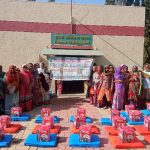
During 2021 some very promising advanced breeding lines, namely PBSA 11135, PBSA 11127 and PBSA 21111 (produced higher yields by an average of 18% over the best check); PBS 15044, 16015, 16021 and 16023 (identified with >3 weeks of fresh seed dormancy); PBS 19040, PBS 19042, PBS 19050, PBS 19052, PBS 29243, PBS 29247 and PBS 29248 (with noble confectionery traits viz., ≥60g large seed, >30% protein, 45-48% oil content in seed); PBS-12228 (59% superiority in kernel yield over the best check, TG37A); PBS-12231 and PBS 12232 (39 and 55% superiority in pod yield over the best check, TG37A); PBS 22040 and PBS 29192 (Iron chlorosis tolerant advanced breeding lines) have been identified. An online groundnut germplasm database is being maintained and updated regularly. Genotype PBS 29079B was registered as a novel source for high 100-kernel weight (85.36 g). Three CAM variants viz., DGRMB5, DGRMB19 and DGRMB32 significantly enhanced groundnut pod yield (27-33%) over the best check (GG7) during summer 2021. Cultivars GJG 9, DH 86, GJG 31, Kadiri 9 and SG 99 were identified as nutrient dense cultivars with low phytic acid content. Two CAM variants, DGRMB5 (INGR21060) and DGRMB19 (INGR21061), developed through facultative CAM transition, were registered with NBPGR as novel sources of tolerance to salinity. The institute has produced about 85 quintals of nucleus seeds during 2021. The institute also organized a number of extension outreach programmes viz., farmer’s trainings, farmers’ fair-cum-exhibition, FLDs, Mera Gaon Mera Gaurav (MGMG), Swachchata Pakhwada and other diverse/theme based programmes (like, TSP, SCSP, and NEH programmes).
We are quite confident that we will join hands decisively, to act together to make brand DGR outshine globally in the years to come. Thanks to each member of the ICAR-DGR family for their immense contribution and continued Team efforts as we believe in Team Work.
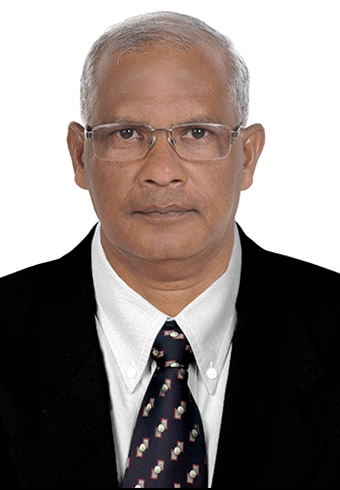
Dr. Sandip Kumar Bera
Director
Date: 20.11.22
 Views Today : 1255
 This Month : 39295
 This Year : 574036
 Total views : 3731235